 English
Almost every grower wants to speed up germination. The impulse is easy to understand. A tray that sits still for a week feels like wasted time. However, speed and vigour are not the same goal, and pushing one can quietly cost you the other.
This article separates the two. You will see which levers shorten the wait safely, and which ones buy a day at the price of a weaker plant.
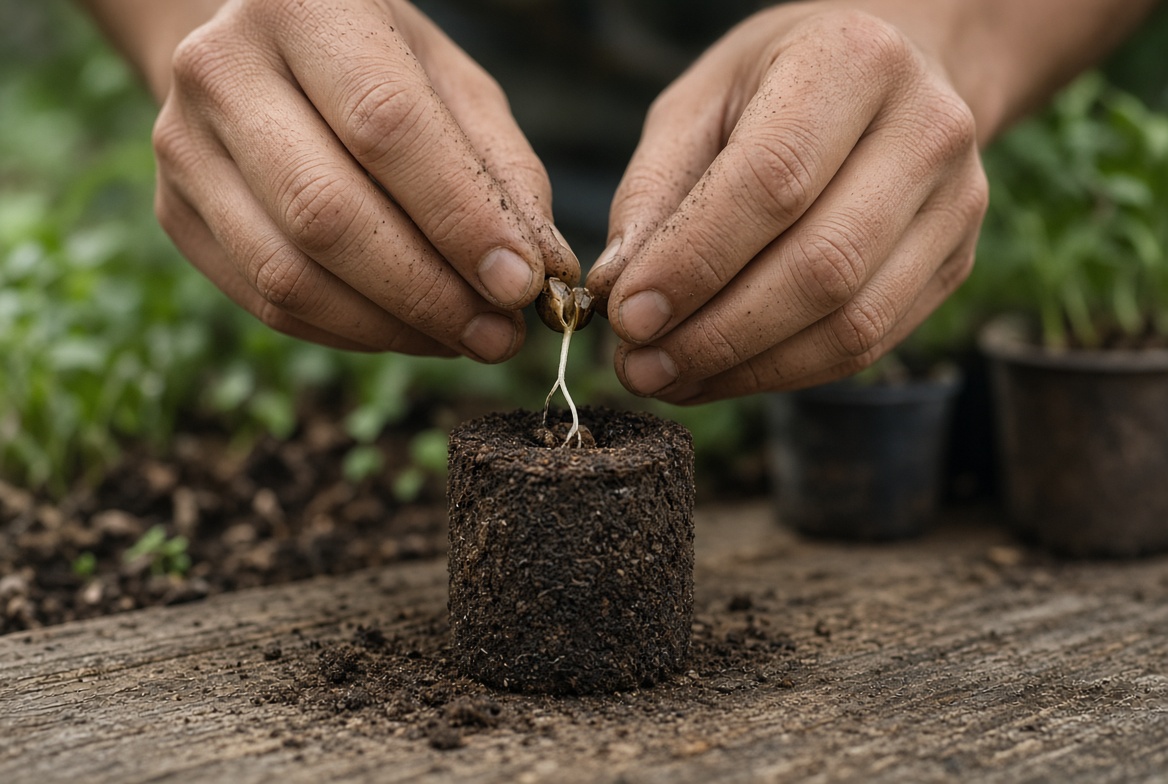
What speed and vigour actually mean
Speed is simply days to emergence. Vigour is how strong the seedling is once it arrives. A fast seedling with a thin stem and pale leaves is not a win. In fact, it usually falls behind by week three.
Why the two can pull in opposite directions
A seed spends stored energy to break through. If conditions push it hard, it spends that energy faster. Therefore the plant reaches the surface sooner but with less in reserve. The goal is to remove obstacles rather than to force the process.
Temperature is the safest accelerator
Warmth is the one lever that gains time without a penalty. Hold the medium between 22 and 25 degrees Celsius. At that range most seeds emerge in three to five days. At 16 degrees the same seeds may take nine. So a thermostat is the cheapest speed upgrade available.
How high is too high
Above 28 degrees the picture changes. Emergence gets faster but also uneven. Seedlings stretch and the first internode grows long and weak. Above 30 degrees, losses climb sharply. In short, warmer is better only up to a point.
Oxygen at the root zone
Roots respire from the first hour. A dense, soaked medium starves them of air. That single factor slows germination more than cold does. Choose a light mix and water it lightly rather than heavily.
Moisture level, not moisture amount
The target is damp, not wet. Squeeze a handful of medium and no water should run out. Then keep that level steady. Constant swings between wet and dry cost more days than a single dry patch.
Seed freshness sets the ceiling
You cannot make an old seed fast. Fresh, well stored seed emerges quickly on its own. Two year old seed from a warm cupboard will lag no matter what you do. Therefore storage is a speed decision made months in advance.
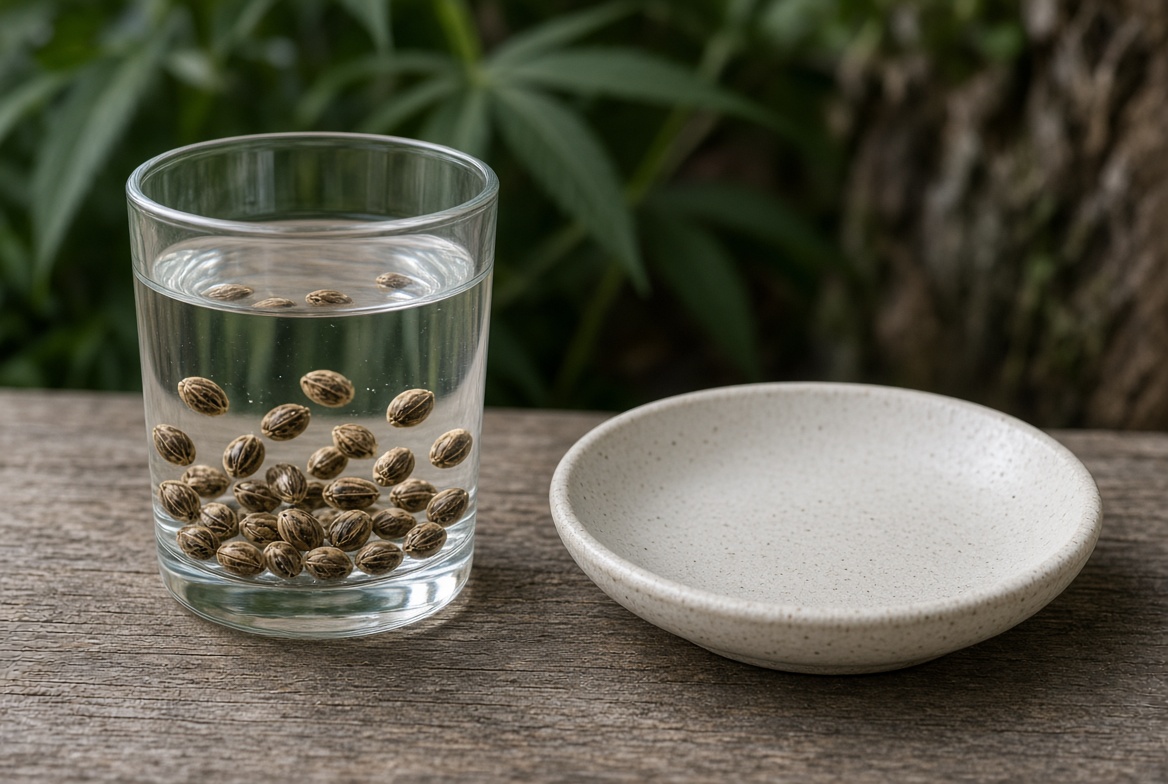
Light and darkness during germination
A seed does not need light to germinate. It does need light within hours of breaking the surface. Have the lamp ready before you expect emergence. Otherwise the first day of stretch happens in the dark and you cannot undo it.
What not to use to speed up germination
Some shortcuts trade vigour for a day. Cracking shells with pliers is the worst of them. Nicking the seed coat with a blade is close behind. Both damage the embryo often enough to be a bad bet.
Excess heat and the stretched seedling
Growers often place trays on a radiator. The seed responds, but the stem elongates before the leaves open. That thin stem never fully thickens. As a result, the plant needs support later and topples easily.
Hormones and the vigour cost
Gibberellic acid genuinely shortens dormancy. It also drives cell elongation, which is exactly what you do not want. Treated seedlings come up pale and leggy. For a normal grow that trade is not worth taking.
Measure vigour, not just speed
Track more than the calendar. Note how many days each seed took and how even the batch was. Then look at the seedlings themselves. Those two records together tell you whether a change actually helped.
Stem thickness and the first true leaves
A strong seedling has a short, thick hypocotyl. Its cotyledons are wide and dark green. The first serrated leaves appear within four or five days of emergence. A vigorous line such as Runtz Feminized shows this pattern clearly.
A schedule that speeds up germination safely
- Prepare and moisten the medium a day ahead, so it reaches room temperature.
- Soak the seed in clean water for eight to twelve hours.
- Sow one centimetre deep and firm the surface only lightly.
- Hold 22 to 25 degrees and high humidity for five days.
- Switch the light on the moment the first shoulders appear.
This sequence typically gains two to three days over an unheated windowsill.
Prepare the medium the day before
Cold, freshly watered medium can sit ten degrees below room temperature. A seed placed into it loses most of a day. Wetting the medium in advance removes that delay entirely. It costs nothing and it is the most overlooked step here.
Sowing depth changes emergence time
One centimetre is the sweet spot. At three centimetres the shoot spends extra energy and time. At the surface the seed dries out and stalls. Consistency across the tray also makes the batch emerge together.
The first seventy two hours above ground
This window decides stem quality. Keep the light close enough to prevent reaching. Give gentle air movement so the stem thickens. Also drop humidity slowly rather than all at once. Autoflowering lines like Gorilla Glue Autoflower are especially sensitive here because their timeline is short.
Common mistakes that cost days
Checking a paper towel every hour dries the root tip. Transplanting a sprouted seed damages it. Watering heavily before emergence compacts the surface. Each of these adds a day or two. Together they explain most slow trays.
When slow is simply normal
Some genetics take their time. Older sativa leaning lines and landrace material are often slower and less even. That is a trait, not a fault. A modern hybrid such as Apple Fritter Feminized will usually beat them by a day or two.
Why an even batch matters more than a fast one
A tray that comes up together is far easier to manage. You can water, feed and light every plant the same way. In contrast, a spread of five days leaves you juggling two stages at once. Evenness therefore beats raw speed on almost every measure.
Water quality and its small effect
Clean tap water is fine in most places. Let heavily chlorinated water stand overnight if the smell is strong. Beyond that, water chemistry has little influence at this stage. Do not spend money here before you have fixed temperature.
Keeping records across batches
Write down the sowing date, the medium temperature and the day each seed appeared. After two or three rounds a pattern emerges. That pattern is worth more than any general advice, because it reflects your own room.
A note on local law
Rules on cannabis cultivation differ widely from country to country and, in some places, from region to region. Seeds are sold as collector and genetic preservation items. This article is general horticultural information. Please check what applies where you live before germinating anything.
Light distance in the first days
A stretched seedling almost always means weak or distant light. It reaches for the source and spends energy on height instead of structure. Therefore lower the lamp gradually and check every twelve hours. Consequently the internode shortens and the plant builds a frame before it grows tall.
Humidity in the first seventy two hours
A new root is fragile and dries out quickly. By contrast, saturated medium rots the stem base. Therefore keep the medium merely moist and use a light cover to hold air humidity. In addition, remove that cover as soon as the first true leaves appear.
Gentle airflow from the start
A weak breeze over seedlings thickens the stem. However, strong direct wind dehydrates and bends them. Therefore aim the fan at a wall and let the air circulate indirectly. Consequently the stem strengthens and carries the first leaves without support.
Frequently asked questions
What is the fastest safe way to speed up germination?
Steady warmth at 22 to 25 degrees in a light, barely damp medium. Nothing else comes close.
Does a longer soak make seeds sprout sooner?
No. Past twelve hours the seed loses oxygen and slows down or dies.
Should I use a heat mat without a thermostat?
No. Unregulated mats often run above 30 degrees and produce stretched, weak seedlings.
How even should a batch be?
Most seeds should emerge within a 48 hour window. A wider spread points at temperature or storage.
